The short answer
Ask what people would like, set out the cups and additions, and brew the amount you will serve now. Remove the bags or leaves at the recommended time before settling in together.
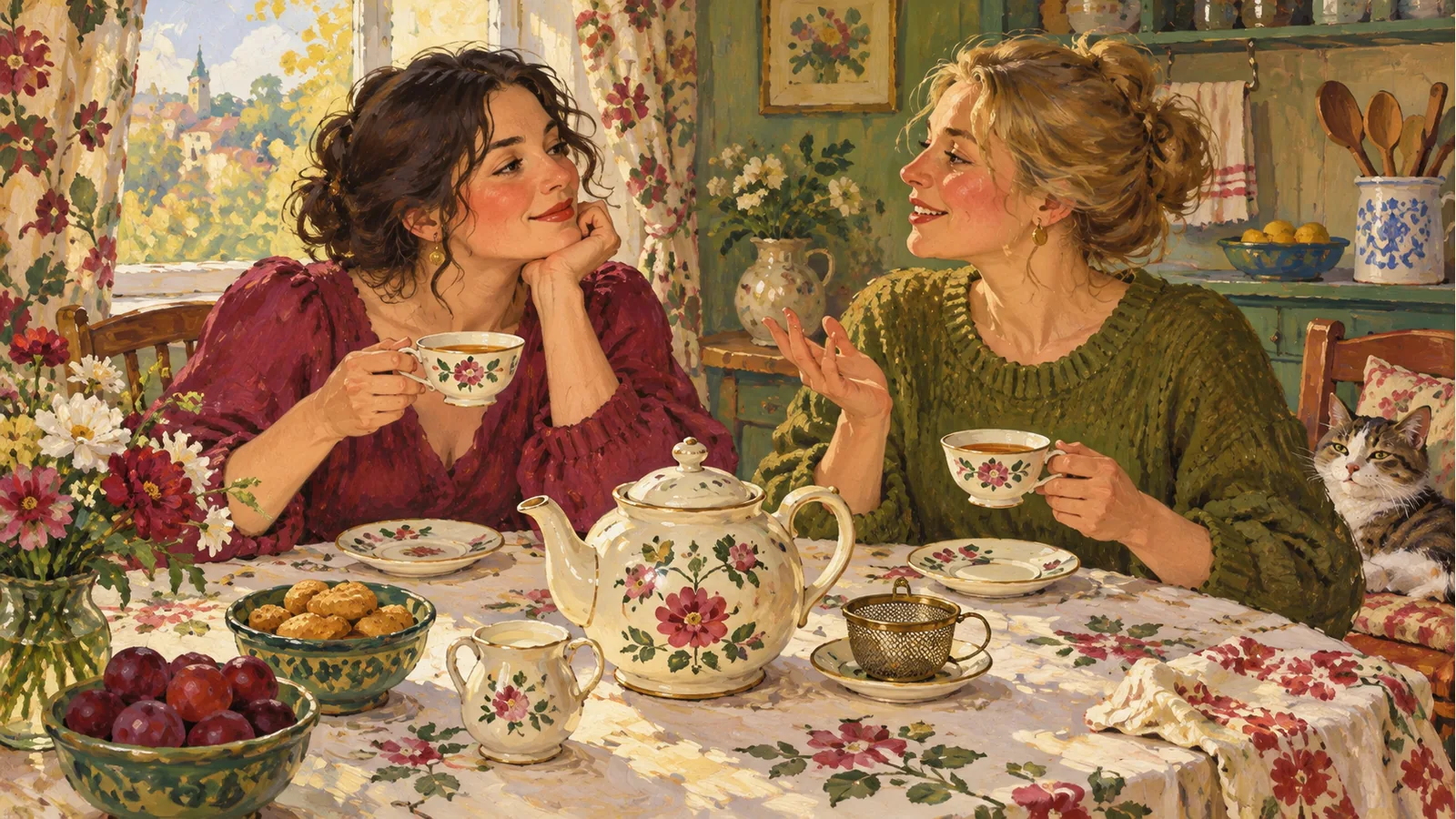
Someone has come round, the conversation is already flowing, and you want to make tea without disappearing into the kitchen for the whole visit. The useful preparation happens before the water reaches the cup: find out what people want, decide whether one pot makes sense, and give the finished tea somewhere to go.
This is a plan for a small, informal visit using tea and equipment you already own. It is not an afternoon-tea menu or a rule about how guests ought to drink.
Ask before you switch on the kettle
“Would you like tea, and how do you take it?” is usually enough. Offer a short, clear choice from what you actually have. Keep the original packets available if someone wants to check ingredients or preparation directions. Let your guest choose rather than guessing from the time of day.
If two people want the same tea, a pot can be convenient. If one wants a different blend, individual mugs may involve less juggling. You do not need an elaborate selection or a second teapot to be a thoughtful host.
Choose the cups before the pot
Set out the cups you intend to use. Two large mugs can call for a very different amount of tea from two small cups. Plan the water for the servings you want now, leaving the usual room for additions and carrying. A pot labelled “four cups” does not tell you how it will fill your particular mugs.
Use the tea maker’s ratio for that water volume. Our bigger-mug guide explains the arithmetic if you need it. The hosting decision is simpler: make an amount you can serve comfortably, and offer another brew later instead of filling the largest pot by default.
Set out the small things while the water heats
Put spoons, a drip dish and any requested additions within reach. Leave milk and sweeteners separate so people can choose their own amount. If you are carrying a tray, leave room to lift each cup without reaching over the pot; several easy trips are better than one awkward load.
A timer helps when conversation is distracting. Twinings directs drinkers to the recommended brewing time on the box or pouch. Use that tea’s directions rather than giving every blend the same treatment. For a broader explanation of water, leaf and timing, see Tea River’s brewing guide.
Finish the brew before you sit down
Decide in advance how you will separate the finished tea from the leaves. Lift a removable basket onto its dish, remove the bags, or pour the whole brew through a strainer into cups or another suitable serving vessel. If loose leaves remain in liquid at the bottom of the pot, that portion is still infusing.
Twinings notes the risk of over-brewing when leaves remain in the cup or pot. The point here is practical: a pause in the conversation should not accidentally become extra brewing time.
Make room for different preferences
Serve additions alongside the tea and let people taste when it is comfortable to drink. A guest who likes a different strength does not need to defend it. Next time, use separate mugs if that makes the preparation easier.
For a late arrival, offer a fresh cup. For a second round, ask who actually wants one before starting. There is no need to keep a pot going for a hypothetical guest. Clear away the wet basket and empty packets, then sit down: the tea has done its job when everyone can enjoy the visit.
Sources and approach
The two linked Twinings guides support product-specific timing and separating leaves from a finished brew. The hosting sequence is NareeTea editorial advice, not a tested serving protocol. Manufacturer examples are not endorsements. Sources checked 10 October 2026.
Everyday questions
Do I need matching cups?
No. Use the cups you have and allow for their actual serving volumes when planning the pot.
Should everyone have tea from the same pot?
Only if they want the same tea. Separate mugs can be simpler when preferences differ.
How many tea bags go in a pot?
Use the directions for that tea and the volume you are brewing. A pot’s advertised cup count is not a reliable tea-bag recipe.
Should the leaves stay in the pot?
For this timed-brew routine, remove the basket or bags, or decant the finished tea completely through a strainer.
When should I add milk?
Offer it separately so each guest can choose. Our Tea with Milk guide covers adding it to an individually brewed cup.
How do I handle a later arrival?
Make a fresh serving for that person instead of leaving the original pot infusing while you wait.