The short answer
For black tea brewed in a mug, follow the packet directions and remove the bag or infuser first. Add milk a little at a time, stir and taste when comfortable to drink. Keep a note of the amount you like.
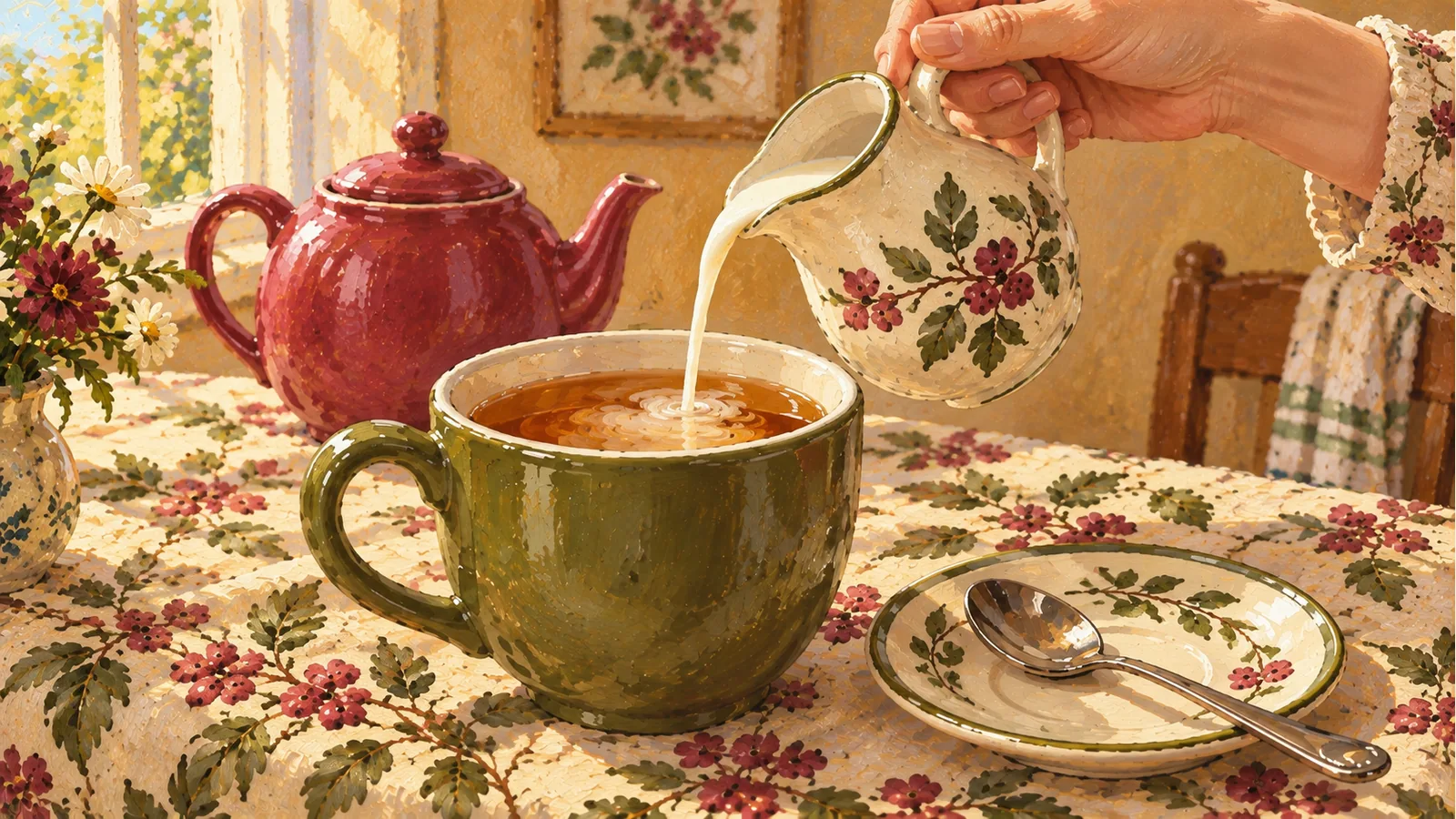
Some mornings, your tea is just right. On others, the same mug tastes mostly of milk. Before changing the tea or leaving the bag in longer, make the final pour a little more deliberate.
This guide is for an ordinary cup of black tea with a small addition of milk, brewed in water first. It is not a recipe for simmered chai, bubble tea or a tea latte. Start with the tea and milk you already enjoy; the aim is a cup you can make again without thinking too hard.
Start with a familiar black tea
Choose a black tea whose serving suggestions include milk. For example, Twinings suggests adding milk to its English Breakfast loose tea. That is one maker's serving suggestion, not a rule that every black tea needs it. Source: Twinings English Breakfast preparation.
Keep your usual mug for the first few attempts. Changing the tea, mug and milk together leaves you with three possible explanations for a different result. If the mug is unusually large, our bigger-mug guide helps you establish the brewing-water amount before you begin.
Brew first, then add milk
When a tea bag is brewing directly in the mug, the UK Tea & Infusions Association recommends completing the brew and removing the bag before adding milk. Use your tea's own directions for the water temperature and brewing time. Source: UKTIA's preparation guidance.
For loose leaf, lift out the infuser or strain the brewed tea into your cup before making the addition. Leave comfortable space at the top. If you need a broader explanation of water, leaf and temperature, see Tea River's brewing guide.
A teapot changes the milk-first question: once tea has finished brewing separately, putting milk into the receiving cup does not interrupt that infusion. Twinings makes this distinction in its guidance. For the small adjustment exercise below, we suggest pouring the brewed tea first so you can add milk in stages. Source: Twinings, “Milk in First or Last?”.
Make the first addition small
Rather than a long pour from the carton, try one small spoonful. Stir, allow the tea to reach a comfortable drinking temperature, and taste. Add another small spoonful only if you want it. The spoon is a way to notice your additions, not a universal milk measurement.
Ask a simple question: would I like the next sip to taste more of tea, or am I happy here? Stop when you like it. You do not need to match a colour chart or someone else's preferred shade.
A practical starting point: use the same mug, tea recipe and milk for two or three cups. Count your small additions. This is our suggested household routine, not a laboratory test or a prescribed ratio.
Change the next cup deliberately
- Too milky for you? Start with less milk next time. Do not change the brewing time at the same moment.
- Too strong before milk? Recheck the packet directions and the amount of water you used. Adjust the brewing recipe separately.
- Good plain, but lost after the addition? Try a smaller addition before choosing a different tea.
- Different when someone else makes it? Describe your usual mug and number of spoonfuls rather than asking for “a splash”.
You are recording a preference, not grading the tea. A lighter, milkier cup can be exactly what you want; so can a dark cup with barely any milk.
Use the milk you actually drink
Use your usual dairy milk or plant-based drink for the trial, following its label directions. If you change it, treat that as a new version of the recipe rather than assuming the same addition will be your favourite. Keep the tea preparation steady while you decide.
This guide does not rank milks, make nutrition comparisons or promise that every plant-based drink behaves identically in hot tea. If you are making a cup for someone else, ask what they use and let them add their own. There is no need to turn a shared pot into a shared preference.
Remember just enough for tomorrow
A useful note might say: “Blue mug, packet brew, two small spoonfuls of my usual milk.” Add the brewing-water volume if you have measured it. If you want more precision, use a measuring spoon and record the amount; otherwise, the same household spoon may be enough for your routine.
Keep the note with your tea or in your everyday tea station. Once the cup is reliably yours, put the note away. The point is a pleasant daily habit, not another task.
Sources and editorial scope
Primary sources checked 29 September 2026: UKTIA's mug-brewing guidance, Twinings' milk-order explanation and its English Breakfast serving suggestion, linked beside the relevant claims. The small-addition exercise and troubleshooting routine are NareeTea editorial suggestions; no comparative tasting trial is claimed. NareeTea products remain in development. This guide uses no NareeTea product recipe and makes no health or sourcing claims.
Everyday questions
Should milk go in before the tea bag?
For a bag brewed directly in the mug, brew in water first and remove the bag before adding milk. A separately brewed pot is a different situation.
How much milk should I add?
There is no fixed amount in this guide. Begin with a small addition, stir and taste, then add more if you prefer. Use the same spoon if you want to repeat it.
Is milk first wrong when using a teapot?
No. If the tea has finished brewing separately, milk in the receiving cup does not interrupt that brew. Adding it last is convenient for our gradual tasting routine.
Can I use a plant-based drink?
Use the drink you normally enjoy and follow its label directions. Treat a change of milk as a new version of the recipe rather than assuming identical results.
Should I brew longer because I add milk?
Start with the tea maker’s preparation directions. Keep your milk amount steady when adjusting the brew, and change one thing at a time.
Is this a tea latte or chai recipe?
No. It is a routine for black tea brewed in water with a small addition of milk. Simmered chai and tea lattes use their own recipes.