The short answer
Keep a mug, timer and drip dish easy to reach, store the tea separately from heat and steam, and leave clean, dry tools ready for the next cup.
A useful tea station is simply a place where the next cup is easy to begin and the last one is easy to clear away. It might be a corner of a counter, one cupboard shelf, or a tray you put away after breakfast. You do not need matching tins or a new kettle.
Start with the cup you already make. Notice what sends you searching: a clean spoon, the packet instructions, somewhere to rest a wet infuser. Give those things a home before adding anything else. This guide is about that small sequence of actions, rather than choosing a collection of teas.
Start with one cup's worth of equipment
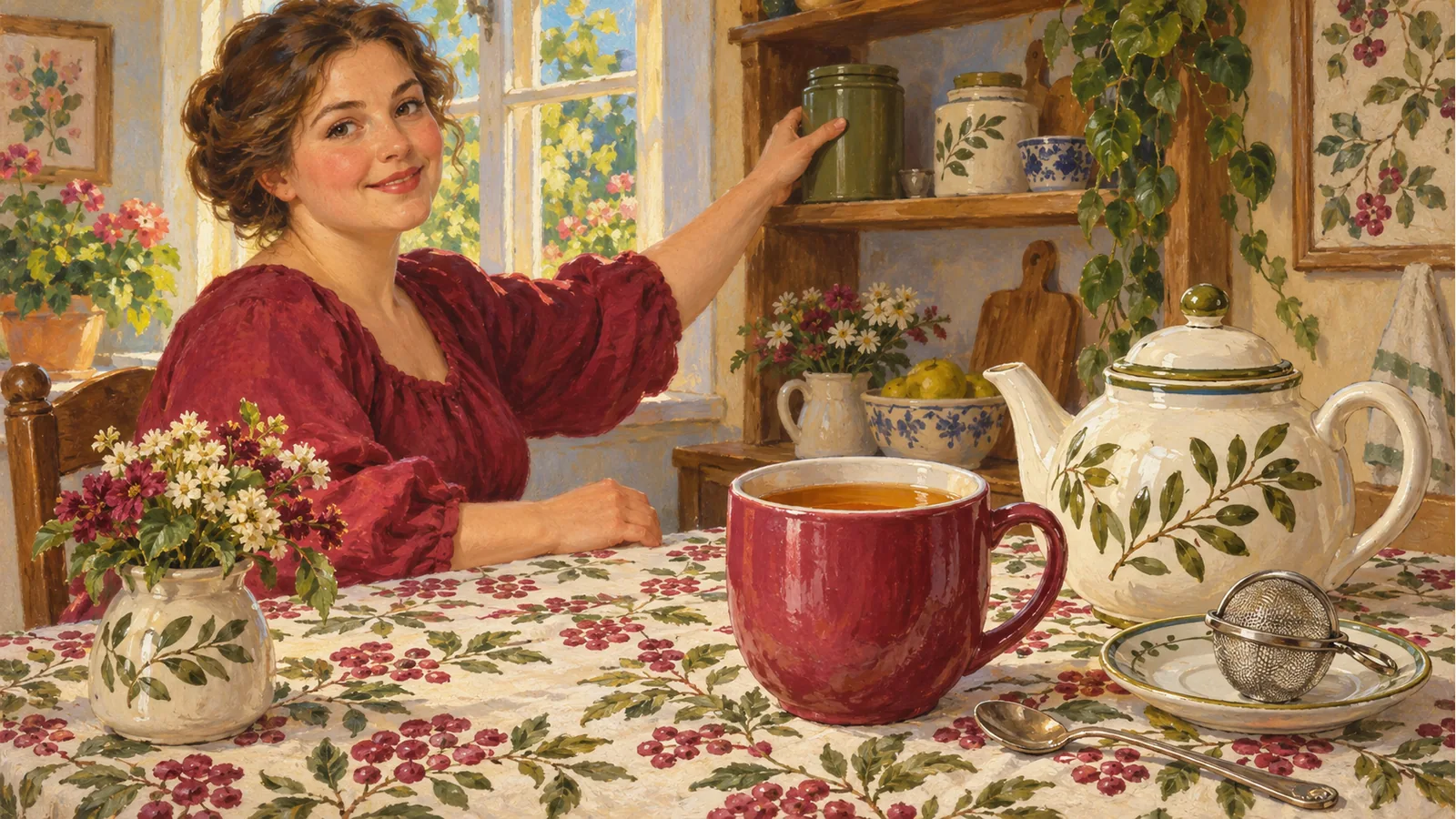
Set out a mug, your usual tea, a way to time the brew, and a small dish for the used bag or infuser. For loose leaf, add the infuser you already use and a dry spoon. A kitchen scale is useful if your recipe gives a weight; it is not a requirement for using a tea bag.
Make a cup with this arrangement before buying a tray or organiser. If you have to move three decorative objects to reach the mug, the station is working harder than it needs to. If you drink tea in different rooms, a small tray for the finished cup and spoon may help; the kettle can stay in its normal safe place.
- On the working surface: space for the mug, a spoon and a drip dish.
- In dry storage: the closed tea packet or tin.
- Within reach: the preparation instructions and a timer.
- Near the sink: somewhere for washed equipment to dry.
Keep dry storage separate from the brewing spot
The most convenient place for a mug is not necessarily the best place for the tea. A shelf directly above a steaming kettle brings the packet close to moisture. A sunny windowsill may look inviting but is a poor default for everyday storage.
Tea producer Ippodo advises keeping its tea away from sunlight, high temperatures, humidity and strong smells. It also recommends rolling and clipping the inner bag closed between uses, either alone or inside its can. That makes a simple cupboard and the original packaging a sensible starting point; a decorative container is optional. Source: Ippodo's tea-storage guidance.
Follow any specific storage directions on your own tea. Keep the packet's name, ingredients, date and brewing instructions if you transfer it to a tin. A folded packet tucked alongside the container is often easier than rewriting everything. Use a clean, dry spoon for dry leaf, and close the pack before you begin pouring water.
Put the recipe where you will use it
A tea station does not need a notebook full of tasting scores. It needs enough information to repeat a cup you enjoyed. Write down the tea, the amount of water you actually pour, the leaf weight or number of bags, and the packet's temperature and time.
Your everyday-cup card
Tea: ______
Brewing water: ______ ml
Tea amount: ______ g or ______ bag(s)
Water temperature: ______
Steeping time: ______
Milk or other additions: ______
Leave the blanks empty until you have checked your tea. Different products need different preparation; this is a memory aid, not a universal recipe. Twinings' brewing guide likewise directs drinkers to the appropriate time for the tea and notes that colour appears before the full flavour develops. A timer gives you a more repeatable cue than deciding that the water looks dark enough. Source: Twinings' brewing guidance.
If your mug is much bigger than the serving described on the packet, use our bigger-mug guide to work out a starting amount. Keep that note with this particular mug rather than assuming it applies to every cup in the cupboard.
Finish with a small reset
The most useful habit happens after the brew. Remove the bag or infuser when the chosen steep is finished, put it on the dish, and deal with it before it becomes tomorrow's obstacle. Empty used leaf into a suitable waste container rather than washing a pile of it down the sink.
Wash the mug, dish and infuser according to their care instructions, then let them dry. Keep damp tools out of the tea container. Wipe up spills and put the dry spoon back in its place. Twinings starts its preparation advice with clean brewing equipment; the reset is our practical way of making that easier next time.
You need not time this or turn it into another household rule. The question is simply: will the next person find a clean mug and know where the tea is?
Make it work in a small or shared kitchen
In a small kitchen, give the station a boundary: one shelf or one part of a drawer, with the mug stored wherever the other mugs live. Keep only the current packet there. A tea station that packs away is still a tea station.
In a shared kitchen, mark personal tea clearly and agree on a home for the drip dish. Keep preparation notes with the packet so someone else can make the same cup without guessing. Avoid decanting several different blends into identical unlabelled tins.
After a few ordinary days, remove whatever you have not touched. Add something only when it solves a repeated inconvenience. The aim is a pleasant cup with fewer small searches, not a display that needs maintaining.
When your question is about the tea itself
For choosing between formats, Have More Tea covers loose leaf and tea bags. For a broader explanation of brewing variables, see Tea River's brewing guide. Tea Urgency's daily tea rotation looks at choosing teas for different occasions. Here, the job is smaller: make the tools for your existing cup easy to use again.
Sources and editorial scope
Primary sources checked 25 September 2026: Ippodo's storage advice and Twinings' preparation guide, linked above. The station layout, recipe card and reset sequence are NareeTea editorial suggestions, not research claims about habit formation. This guide concerns ordinary household preparation; it does not describe specialist tea ageing, promise health effects, or announce NareeTea products.
Everyday questions
Do I need a dedicated tea tray?
No. A shelf or drawer works. Try the arrangement with your existing equipment before buying an organiser.
Should the tea tin live beside the kettle?
Choose dry storage away from steam, heat, direct sun and strong smells. The mug can be convenient to the kettle while the tea stays in a nearby cupboard.
Can I keep the original tea packet?
Yes. Follow its storage instructions and close it between uses. Keep its ingredients, dates and preparation directions even if you use a separate tin.
What should go on my recipe card?
Record the tea, brewing water volume, tea amount, temperature, time and any usual additions. Use the instructions for that tea as your starting point.
How do I keep the setup ready?
Remove used leaves, wash equipment according to its care instructions, let it dry and return the dry tools to their place.
Does this guide require NareeTea products?
No. Use the tea and tools you already have. NareeTea products are still in development.