The short answer
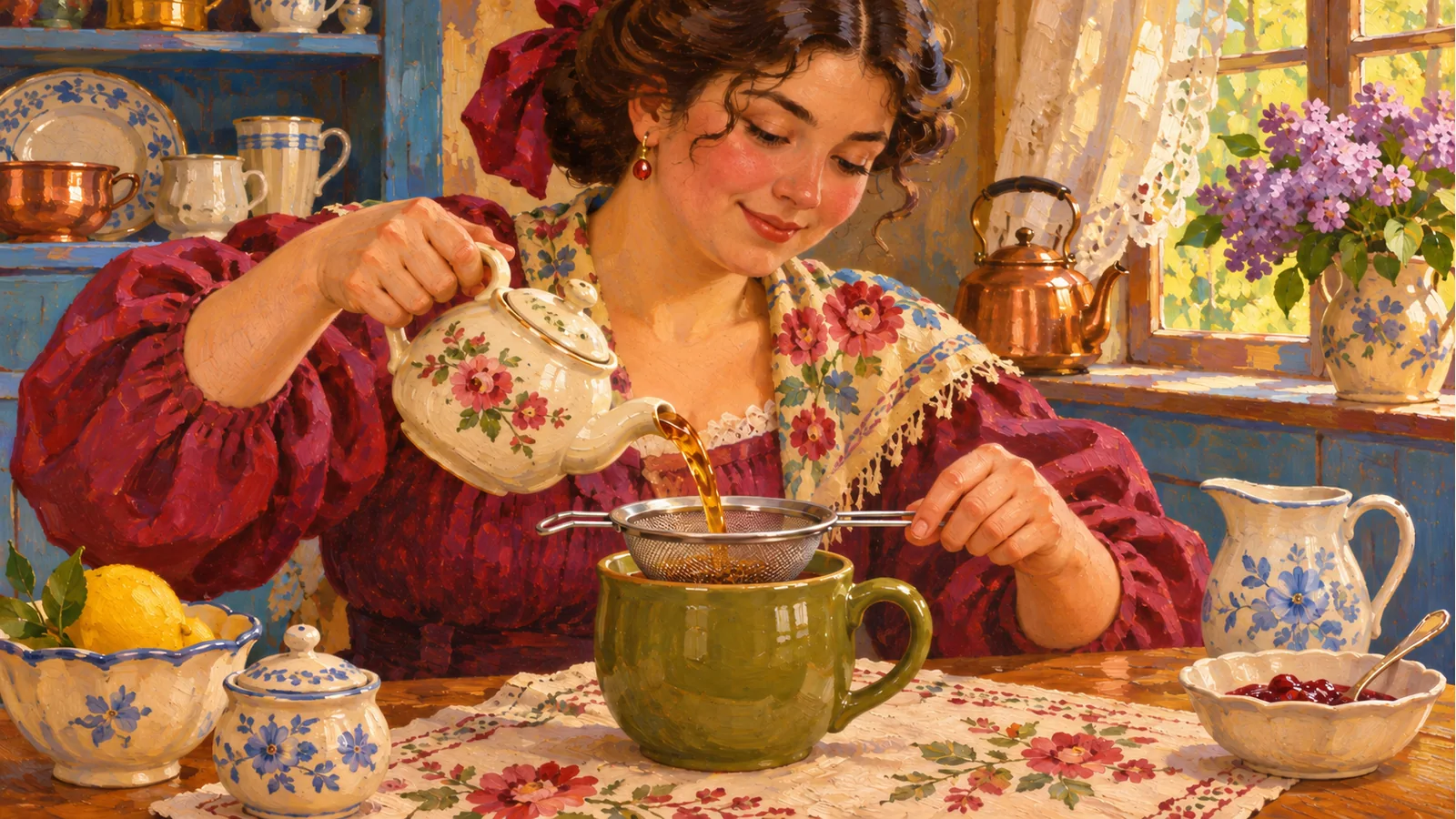
Brew loose leaves in a suitable teapot using the tea’s directions. Rest a clean fine-mesh kitchen sieve securely over a receiving cup or heatproof jug, then pour the finished tea through it.
You have loose tea, but the infuser is missing. Before buying another, look for a teapot and a clean, fine-mesh kitchen sieve. The useful distinction is simple: the leaves can brew freely in one vessel and be strained out as the tea goes into another.
Set up before the water goes on
Choose a teapot intended for hot tea and a receiving cup large enough for the serving. For more than one cup, use a suitable heatproof serving jug. Check capacity with cold water first if you are unsure. Leave room for a comfortable pour rather than filling to the brim.
Try the sieve over the empty receiving vessel. It should rest securely without needing a hand to hold it in mid-air. A broad sieve over a narrow mug may be awkward; change the vessel before working with hot liquid. Clear a level space and put a dish nearby for the wet sieve.
Brew first, strain afterwards
Twinings’ loose-tea guide describes brewing leaves directly in a pot or cup and pouring through a mesh strainer afterwards. Use your tea’s own amount, water volume, temperature and timing. The sieve is a way to separate the leaves, not a reason to change that recipe.
- Measure the tea into the pot and add the water as directed.
- Start the timer. Set the receiving vessel and stable sieve on the cleared surface.
- When brewing finishes, pour slowly through the sieve, following the pot’s handling instructions.
- Decant the whole finished batch, then move the sieve onto its dish.
As Twinings notes, separating the leaves stops the remaining tea from continuing to steep. If you want only one cup now, brew only that amount instead of leaving a larger batch sitting on its leaves.
What about small leaf fragments?
Look at the sieve before choosing this method. A coarse colander is unlikely to catch finely broken leaves. A little sediment may not bother you, but if it does, use a finer suitable strainer or a tea filter designed for the job next time. Do not improvise with an unknown fabric or an unstable stack of filters.
Make the next cup easier
Keep a note of the pot, serving volume and tea recipe you used. If the cup tastes different, change one part of the recipe on the next attempt so you know what helped. Our bigger-mug guide explains adapting a known recipe to a measured serving.
When finished, discard the leaves and follow the care instructions for the pot and sieve. Our tea-tool care guide covers the everyday reset. A dedicated infuser may eventually be convenient, but this small trial helps you decide from experience.
Everyday questions
Do the leaves need a basket while brewing?
No. This method lets them brew loose in the pot, then separates them when you pour.
Can I use any kitchen sieve?
Check that it is clean, suitable for hot food and stable across the receiving vessel. Coarse holes may let small leaf pieces through.
What if the sieve does not sit securely?
Use a different receiving vessel or another suitable brewing method. Do not balance a wobbly sieve while handling a hot pot.
Should I change the packet recipe?
Start with its stated tea amount, water volume, temperature and time. Changing the straining tool does not establish a new recipe.
Can I leave the rest of the tea in the pot?
Pour the finished batch off the leaves. Otherwise the remaining liquid continues to steep.
Is a dedicated infuser still useful?
It can make a single mug simpler. Try this method with suitable tools you own before deciding whether another tool would help.